The Personal Injury Lawyers Carabin Shaw have represented injured Texans for over 34 years. The firm has board-certified Lawyers certified in personal injury trial law by the Texas Board of Legal Specialization, holds an AV Preeminent rating from Martindale-Hubbell, and has zero disciplinary history with the State Bar of Texas. Call (800) 862-1260 for a free case review. Principal office in San Antonio
Multi-Car Pileups in Austin: Untangling a Chain-Reaction Claim
A multi-car pileup is a crash involving three or more vehicles in a chain of impacts, and it turns a single question — who’s at fault — into a knot of competing accounts and overlapping insurance. Our Austin auto accident attorneys handle pileups because Austin’s crowded freeways are built for them: heavy traffic on I-35 and MoPac, sudden slowdowns, and a following distance nobody keeps mean one hard hit can cascade through a dozen cars. When that happens, every driver blames the one behind them, and every insurer tries to shift the loss to someone else.
Pileups are different from two-car crashes because fault is rarely clean. In a chain reaction, one vehicle may be pushed into another it never would have hit on its own, and a driver in the middle may be both struck and striking. Untangling who caused what — and in what order — is the central challenge, and it decides how the available insurance gets divided among everyone who was hurt.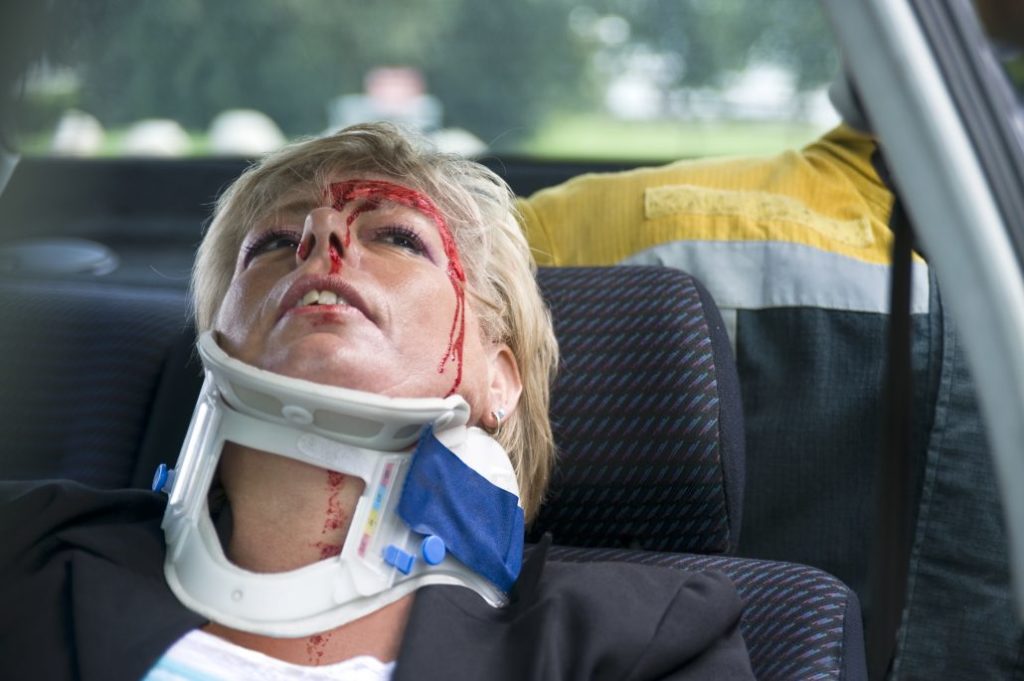
Understanding how these claims are sorted out is the first step to making sure you aren’t the one left holding the blame or the bill.
Why Pileups Happen on Austin Freeways
Chain-reaction crashes take a triggering event and a lot of cars packed too close. The common ingredients include:
- Sudden stops in heavy traffic. One abrupt halt on a packed freeway sets off a wave of rear-end hits.
- Following too closely. Tailgating removes the reaction time that would stop the chain.
- Low visibility. Fog, heavy rain, or smoke hides stopped traffic until it’s too late.
- Speeding for conditions. Drivers going too fast can’t stop when the car ahead does.
- A single serious crash that blocks lanes and traps the vehicles behind it.
How Fault Is Divided in a Chain Reaction
Texas uses proportionate responsibility, which means fault in a pileup can be split among several drivers by percentage. A driver who caused the first impact may bear most of the blame, but a driver who was tailgating, speeding, or distracted farther back in the chain can share it too. Where you fall in the sequence — and whether you kept a safe distance — shapes how much you can recover, since your recovery drops by your share of fault and disappears entirely above 50 percent. This is why establishing the order and cause of each impact matters so much.
When Several Policies Aren’t Enough
A pileup can leave many people injured and several drivers at fault, which means multiple insurance policies may be in play — and they can run out. When the at-fault drivers don’t carry enough coverage to go around, your own uninsured/underinsured motorist coverage may fill the gap. Identifying every responsible driver and every applicable policy is essential in a crash where the available money has to stretch across many victims.
The Evidence That Reconstructs the Chain
Proving your place in a pileup takes objective evidence, because eyewitness accounts conflict and memories blur in the chaos. That evidence includes the crash report, highway and traffic-camera footage, dashcam video, the position and damage pattern on every vehicle, and the event-data recorders that captured each car’s speed and braking. Together they let an expert reconstruct the sequence — who stopped, who hit whom, and who never had a chance to avoid it.
This evidence scatters and fades fast, so our team moves quickly to gather it, and a former police officer on our investigation team can work a complex multi-vehicle scene the way it needs to be worked.
What a Pileup Claim Can Recover
Injured people can recover medical costs, future care, lost income, diminished earning capacity, property damage, and pain and suffering, with wrongful death and survival claims in fatal pileups. Because the injuries can be serious and the insurance limited, getting the fault sequence right and finding every source of coverage is what determines a fair recovery.
With fault contested among many drivers and the proof time-sensitive, a pileup claim rewards fast, careful investigation over waiting to see how the blame settles.
Talk to Our Austin Car Accident Lawyers
If you were caught in a multi-car pileup on I-35, MoPac, or another Austin freeway, don’t let the other drivers and their insurers decide your share of the blame. Carabin Shaw can reconstruct the chain and find every source of recovery. Call (512) 832-1101 for a free consultation — no fee unless we win.
